
Fiber Optic Tapers: Magnification, Demagnification & Image Coupling Solutions
You use Fiber Optic Tapers to change how big or small an image is. These devices help make images larger or smaller. This lets you connect different sensors and cameras. The market for these solutions is getting bigger.It may double by 2031. You can find them in medical endoscopy, scientific imaging, and industrial X-ray systems. At HONSUN, you can get advanced fiber optic imaging and communication products. These products are trusted in many high-tech industries.
Key Takeaways
Fiber optic tapers make images bigger or smaller. They keep the picture clear. This is important in medicine, science, and industry.
The taper ratio is very important. It tells if the image gets bigger or smaller. It also affects how bright and clear the image is.
Fiber optic tapers help devices and sensors work together easily. They make imaging systems better in medicine and research.
Picking the right taper means thinking about sensor size. You also need to think about image quality and cost. Custom tapers can give special results.
Fiber optic tapers are helpful but can cost a lot at first. They need experts to design them. Careful planning is needed.
Fiber Optic Tapers Overview
Structure and Function
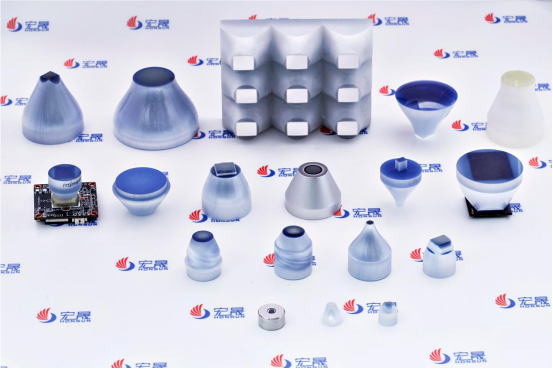
You can think of fiber optic tapers as special tools that change the size of an image while keeping it clear. These devices use many tiny fibers bundled together in a cone shape. Each fiber acts like a small pipe for light. The way you design these tapers affects how well they work.
The taper itself changes the diameter of the fiber core. This change affects how much light the taper can carry and how focused the light stays.
Most tapers use glass core and glass cladding fibers. Some use plastic clad silica fibers for different needs.
Important design features include the length of the taper and the ratio of the diameters at each end. These features help control how much light gets through and how much is lost.
You can see fiber optic tapers in many high-tech fields. They help connect cameras to sensors in medical devices, scientific tools, and industrial machines.
How Fiber Optic Tapers Work
You use fiber optic tapers to move images from one place to another without losing detail. The secret lies in how light travels inside the fibers. When light enters the fiber at a certain angle, it bounces inside the core. This process is called total internal reflection. The core has a higher refractive index than the cladding, so the light stays trapped and moves forward.
The geometry of the taper matters a lot. If you change the diameter too much, you can lose light. The numerical aperture, or NA, tells you how much light the fiber can accept. You need to match the NA at both ends to keep the image bright and clear.
The taper ratio, or the difference in diameter from one end to the other, changes how much light gets through. If the ratio is too high, less light makes it to the other side.
Keeping the right NA values helps you avoid losing light as it travels through the taper.
You rely on these principles to transfer images in devices like X-ray detectors, and advanced cameras. Fiber optic tapers give you a way to connect different parts of an imaging system while keeping the picture sharp.
Magnification & Demagnification
Principles of Image Size Change
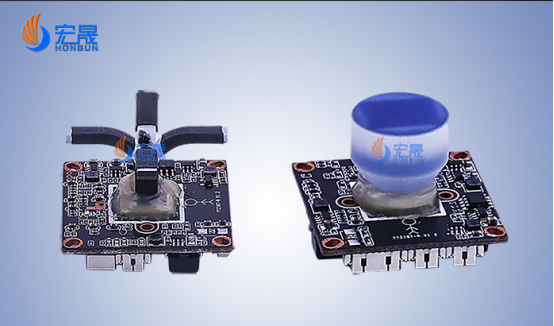
You use Fiber Optic Tapers to make images bigger or smaller. These devices have one end that is bigger than the other. The big end takes in the image. The small end sends the image out. If you want to make an image larger, you switch the ends. The small end gets the image, and the big end shows it.
The size difference between the ends is important. This is called the magnification or demagnification ratio. For example, if the input end is twice as wide as the output, you get a 2:1 demagnification. If the output end is twice as wide as the input, you get a 2:1 magnification.
Tip: Always match the taper ratio to your sensor or display size. This helps you keep the image clear and bright.
You also need to think about how much light you want to keep. If the ratio is higher, the image can look dimmer. You should try to balance the image size and brightness for the best results.
Applications in Imaging Systems
You see Fiber Optic Tapers in many imaging systems. These devices help connect cameras, sensors, and screens that are not the same size. Here are some common uses:
Medical Imaging: You use tapers to connect small sensors to bigger screens in endoscopes and X-ray detectors. This helps doctors see clear images during procedures.
Scientific Research: You can connect microscopes to digital cameras. The taper changes the image size so the camera can see all the details.
Industrial Inspection: You use tapers in machine vision systems. They help fit images from big inspection areas onto smaller sensors.
Fiber Optic Tapers give you many choices. You can design your system to work with many sensors and displays. This makes your imaging setup stronger and easier to change.
Image Coupling Solutions
Device and Sensor Integration
You can use fiber optic tapers to link devices and sensors. This lets you move images from one part to another without losing details. In medical imaging, fiber optic biosensors are inside catheters, syringes, and needles. These sensors help doctors see clear pictures inside the body. For example, a fiber sensor can fit in a 27-gauge stainless steel needle. This makes medical tools better and easier to use. You also find optical fiber biosensors in catheters for taking samples many times and seeing small details. These things are important for doctors and nurses.
In science, you use tapered fiber optics as light probes. They help you look at cells and tissues very closely. Fiber microcomponents work in microfluidic detection systems. They help you find and measure tiny biomolecules. Enlarged core tapers handle strong light in medical and industrial places. You can use them for flexible and strong imaging.
In factories, you use fiber optic tapers for machine vision and checking parts. They help you connect big viewing areas to small sensors. This makes your inspection systems work better and more accurately.
Note: You can check out HONSUN’s fiber optic tapers and fiber optic panels for advanced solutions.
Compatibility with Fiber Optic Panels
You need to make sure your fiber optic tapers match with fiber optic panels. This helps you build strong and flexible imaging systems. Fiber optic tapers are used in X-ray imaging for medical and science tools. They give you clear, real-time images. This is important for doctors during small surgeries.
You might have some problems when you connect tapers to digital sensors. Here is a table that shows common problems:
Challenge Type | Description |
Manufacturing Reliability | You need sensors that work well every time you use them. |
Handling Difficulties | Packing and strength can make tapers hard to use. |
Limitations Related to Diffraction | The diffraction limit can change how well you catch and measure particles. |
Accuracy in Connection | You must connect the tiny fiber core very carefully. |
Lateral Displacement Influence | Small moves can change how well the connectors work. |
You can use fiber optic tapers with panels to make images better in many fields. In medical imaging, they help you see inside the body with less risk. In science labs, you use them to study samples at the cell level. In factories, they make inspection systems more exact.
If you want to know more about matching products, visit HONSUN’s fiber optic panels and fiber optic tapers pages.
Benefits, Limitations & Selection
Advantages of Fiber Optic Tapers
Fiber Optic Tapers give you many good things in imaging systems. They move images with almost no distortion. You can make your system smaller because tapers use less space than regular lenses. You can add special coatings like anti-reflective or hot mirror coatings to make them work better. If you want bigger images, tapers can make them up to three times larger. The table below shows the main benefits:
Advantage | Description |
Low distortion | Keeps your images clear and accurate. |
Compactness | Saves space in your equipment. |
Compatibility with optical coatings | Works with AR, Hot Mirror, and ITO coatings. |
Magnification | Makes images up to three times larger. |
Common Limitations
There are some problems you should know about when using these devices. The starting price can be high, so new projects may cost a lot. Making and designing tapers needs people with special skills. Sometimes, other types of technology can do the same job. The market is small for some uses. You might also have to follow rules in your industry. The table below lists common problems:
Limitation | Description |
High Initial Costs | Starting costs can be high. |
Technical Complexity | Needs skilled people to design and use. |
Competition from Alternatives | Other solutions may exist. |
Market Size Limitations | Some uses are very specific. |
Regulatory Challenges | Rules can slow down projects. |
Things like temperature and humidity can change how well tapers work. If the temperature changes, the output can shift. Humidity and air changes can also affect results. You may need to check both temperature and humidity for the best results.
Choosing the Right Taper
You should pick a taper that fits your sensor size, image quality, and budget. Standard tapers work for many jobs. If you need something special, custom tapers can last longer and work better. Think about the price and what you get before you choose. For help, you can visit HONSUN’s fiber optic tapers and fiber optic panels pages. If you need a custom taper, you can contact HONSUN for expert help.
Tip: Custom tapers can be made just for you. You get the best results when you ask experts for help.
You have learned that Fiber Optic Tapers can change image size. They also help connect devices in many areas. You get clear pictures for doctors, scientists, and factories. When you know the good and bad things, you can make better choices.
You can build stronger networks.
You make things work better and last longer.
You can control how much money you spend.
Check out HONSUN’s fiber optic taper products and panels for your next project. If you want expert help, talk to HONSUN today.
FAQ
What is a fiber optic taper?
A fiber optic taper is a tool that changes how big an image is. It uses bundled optical fibers to do this. You can make images bigger or smaller. The image stays clear and bright.
How do fiber optic tapers help with image coupling?
You use fiber optic tapers to link devices like sensors and cameras. The taper moves the image between devices. It keeps the details safe. This lets you build flexible imaging systems.
Where can you use fiber optic tapers?
You see fiber optic tapers in medical imaging and scientific research. They are also used in industrial inspection. They help connect sensors, cameras, and screens in high-tech fields.
What is the difference between magnification and demagnification?
Magnification makes an image bigger. Demagnification makes an image smaller. You pick the right fiber optic taper for your sensor or display size.
How do you choose the right fiber optic taper?
You check your sensor size and image quality needs. You also look at your budget. Standard tapers work for most jobs. For special projects, you can ask HONSUN for custom fiber optic tapers or panels.