
Fiber Optic Inverters vs. Traditional Image Inversion: Why Fiber Technology Wins
In the world of high-performance optical imaging, precision isn't just a goal—it's an absolute necessity. For decades, engineers have relied on bulky lens arrays and mechanical prisms to invert images. But today, Fiber Optic Inverters are rewriting the rules of optical engineering.
This isn't just an upgrade; it’s a paradigm shift. Let’s break down why fiber technology leaves traditional image inversion in the dust.
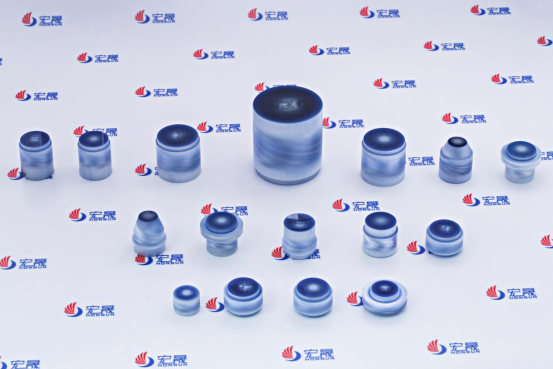
Round 1: Size & Weight – Goodbye Bulky Optics
Traditional lens and prism systems require complex light path folding, resulting in heavy, space-consuming hardware. This severely limits design flexibility, especially in compact devices like night vision goggles, medical endoscopes, or portable sensors.
Fiber Technology (Winner): A fiber optic inverter is essentially a solid, coherent fiber-optic plate twisted 180 degrees during the fusing process. It requires zero mechanical movement and acts as an ultra-thin panel. The result? Radical miniaturization and lightweight integration without compromising optical integrity.
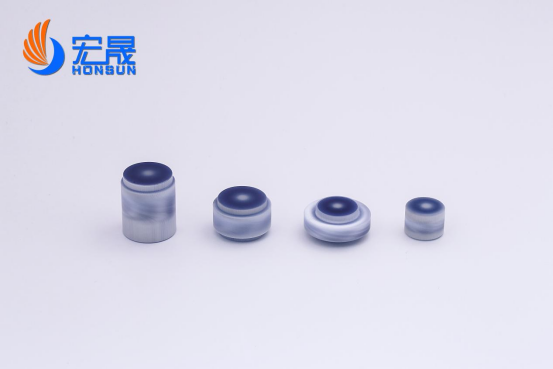
Round 2: Optical Fidelity – Zero Distortion, Maximum Clarity
Traditional systems suffer from inherent flaws. Multiple air-glass interfaces cause light loss, spherical aberrations, and chromatic distortion. Stray light reflections degrade contrast and edge sharpness.
Fiber Technology (Winner): Utilizing total internal reflection, fiber optic inverters map pixels one-to-one. This ensures zero geometric distortion. With no air gaps to scatter light, you get unparalleled brightness, high contrast ratios, and crisp, true-to-life image reproduction.
Round 3: Durability & Stability – Built for Extreme Environments
Precision lenses demand perfect alignment. In high-vibration environments (like aerospace or military applications), traditional optics are prone to misalignment, leading to system failure.
Fiber Technology (Winner): Featuring a robust, all-solid-state structure, our fiber optic inverters are completely passive and highly resistant to electromagnetic interference (EMI), radiation, and mechanical shock. They deliver rock-solid reliability where it matters most.
Round 4: System Integration – Seamless Customization
Integrating traditional optics often feels like forcing a square peg into a round hole.
Fiber Technology (Winner): We can customize fiber optic inverters into various shapes and sizes. Better yet, they can be directly fused to Fiber Optic Tapers (FOT) This eliminates coupling gaps entirely, creating a "zero-dead-zone" optical path.
The Verdict: Why Fiber Technology Wins
Feature | Traditional Inversion | Fiber Optic Inverters |
Form Factor | Bulky, heavy, rigid | Ultra-thin, lightweight, flexible |
Image Quality | Prone to aberration & glare | Zero distortion, high contrast |
Environmental Resistance | Sensitive to shock/vibration | Rugged, solid-state, EMI-resistant |
Integration | Complex alignment required | Direct fusion, customizable, seamless |
The conclusion is clear: Fiber Optic Inverters don't just outperform traditional methods—they unlock the next generation of compact, high-resolution imaging devices.
Upgrade Your Optical Systems Today!
Stop letting outdated optics limit your product's potential. Switch to High-Performance Fiber Optic Inverters and experience the ultimate combination of clarity, durability, and design freedom.
[Guangzhou HONSUN Opto-Electronic Co.,Ltd] – Pioneering Advanced Fiber Optic Solutions.
�� Contact us today for a free consultation and discover how we can optimize your imaging systems.