
Low Numerical Aperture Fiber Optic Plates: High-Resolution Imaging for Precision Applications
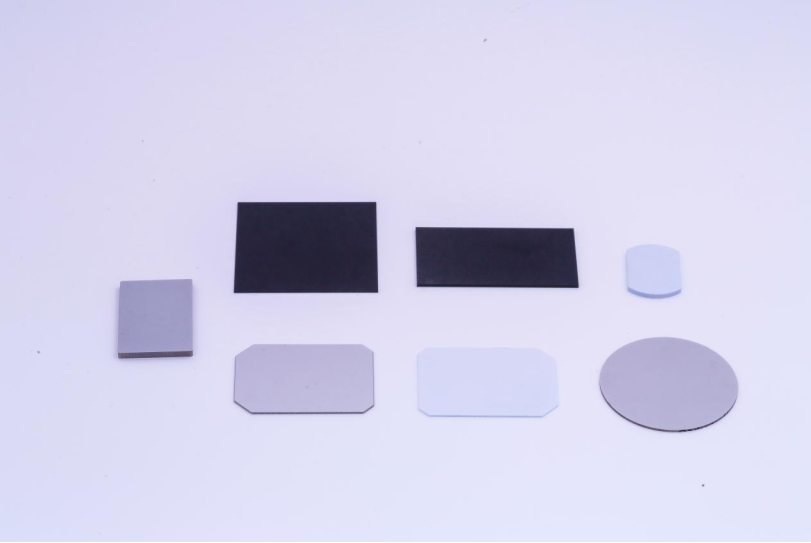
You can achieve superior resolution in high precision imaging systems by narrowing the photon acceptance angle. A low numerical aperture fiber optic plate restricts the optical light cone to suppress inter-fiber cross-talk and block stray light scattering. While you sacrifice ambient light volume, you gain sharp edge definition and optimal contrast. HONSUN leads the optical industry by designing customizable components tailored to your exact numerical aperture needs. As demand grows, choosing the right numerical aperture transforms your overall imaging output.
Key Takeaways
l Low numerical aperture fiber optic plates block stray light to deliver super sharp image edges.
l Narrow light acceptance angles stop light leakage between fibers and boost overall image contrast.
l Matching thermal expansion rates protects delicate digital camera sensors from heat damage during use.
l Custom glass designs improve gene sequencing platforms and digital medical X-ray imaging systems.
Optical Physics of Low Numerical Aperture Fiber Optic Plate
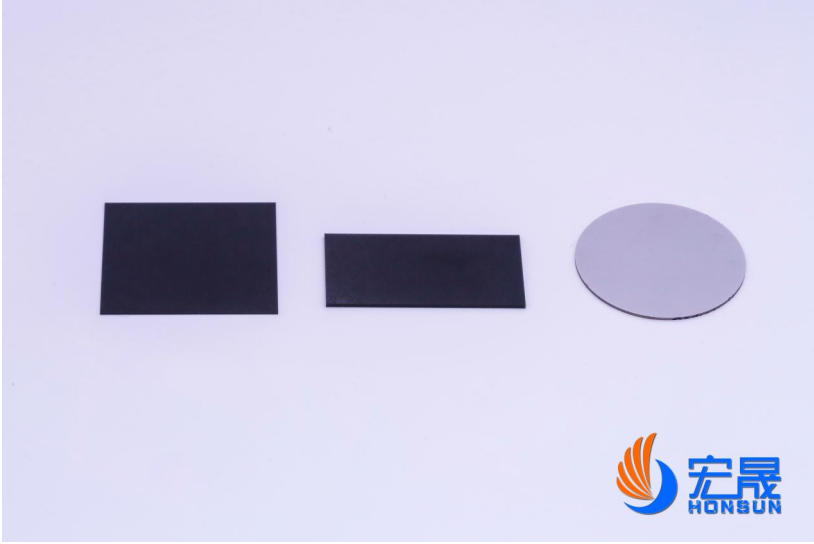
Light travels through fused optical fibers based on fundamental physical laws. When you guide light through micro-scale fiber structures, controlling the angle of entry determines the clarity of your final optical signal. A low numerical aperture fiber optic plate utilizes specific material physics to refine light propagation, delivering pristine edge sharpness for sensitive instruments.
Acceptance Angle Mechanics and Light Cone Reduction
The optical performance of every fiber array depends heavily on its numerical aperture. You calculate this fundamental optical metric using the core and cladding refractive index values:
When you reduce the refractive index difference between these two glass layers, you lower the numerical aperture value. This optical adjustment directly narrows the light acceptance cone angle.
Optical Formula Note:
Lowering the numerical aperture limits light acceptance to highly collimated, near-axis rays.
By limiting the entry angle, you exclude high-angle slanted rays from propagating down the fiber channel. Your system only accepts light traveling nearly parallel to the optical axis.
Suppressing Inter-Fiber Cross-Talk and Stray Light
High-angle light rays often breach the boundary between core and cladding layers inside packed optical bundles. When stray photons travel at steep angles, they bounce across core boundaries and leak into neighboring fibers. Photonic engineers call this phenomenon inter-fiber cross-talk.
Cross-talk creates a fuzzy halo effect around bright image features, severely degrading your overall imaging quality.
Optical Metric | High Numerical Aperture (0.8 - 1.0) | Low Numerical Aperture (~0.15) |
Acceptance Cone Angle | Wide acceptance angle | Narrow acceptance cone |
Photon Transmission | Maximizes photon throughput | Filters off-axis scattered light |
Cross-Talk Vulnerability | Higher risk of adjacent leakage | Superior optical channel isolation |
Primary System Advantage | Low-light signal capture | High precision edge sharpness |
HONSUN solves photon leakage through advanced refractive index matching techniques. By tailoring glass core formulations, HONSUN produces plates with a typical numerical aperture value of 0.15. This low numerical aperture configuration traps light strictly within individual core paths, eliminating unwanted optical bleeding.
Modulation Transfer Function and Contrast Enhancement
Image sharpness relies on preserving high spatial frequencies across your detector faceplate. Optical designers measure spatial detail preservation using the Modulation Transfer Function (MTF). High MTF values mean your system preserves fine details and sharp dark-to-light transitions.
Restricting off-axis light directly improves your overall system MTF curve:
l It eliminates blurry halo effects around microscopic light sources.
l It maintains true optical darkness between tightly spaced signal channels.
l It maximizes signal-to-noise ratios for high-precision sensors.
When you couple a tight numerical aperture faceplate to digital sensors, you protect fine pixel details. This strict light cone management optimizes image spatial resolution, ensuring your sensor records crisp digital signals without optical blur.
HONSUN Low NA Fiber Optic Plate Specifications and Engineering
Precision Glass Formulation and Custom NA Customization
HONSUN engineers raw glass elements to create each low numerical aperture fiber optic plate for critical optical systems. You can select individual glass fiber pitch sizes ranging from 6μm up to 100μm based on your optical layout. HONSUN manufactures these plates with a typical numerical aperture value of 0.15.
Performance Metric Note:
Standard production plates achieve collimated light transmission of ≥65% and Lambertian light transmission of ≥58%.
Fiber Pitch Range : 6μm <------------------------------> 100μm
Typical System NA : 0.15 (Custom settings available)
You can request custom glass formulations to alter the internal index delta. This modification allows you to fine-tune the exact optical numerical aperture angle for your specific detector assembly.
Extra-Mural Absorber Integration for Enhanced Contrast
High-precision image transfer requires effective suppression of stray photons inside the optical bundle. HONSUN integrates extra-mural absorber materials directly around individual fiber channels. These specialized light-absorbing materials capture scattered photons before they enter adjacent glass fibers.
Parameter | Standard Specification |
On-Axis Resolution | ≥100 lp/mm |
Optimum Numerical Aperture | 0.15 typical |
Transmissive Efficiency | ≥65% (Collimated) |
This structural integration prevents internal light leakage across the entire faceplate area. As a result, your optical sensor achieves high spatial resolution reaching ≥100 lp/mm on axis, delivering clean optical signals directly to your precision imaging sensor.
Thermal and Structural Properties for Sensor Coupling
Direct mounting onto solid-state image sensors requires tight thermal matching to avoid structural failures. HONSUN crafts optical plates with a thermal expansion coefficient of (87±2)×10-7/℃ between 20℃ and 300℃. This thermal property matches standard silicon CCD and CMOS image sensor arrays, preventing thermal stress cracking during temperature cycles.
�� Format Versatility:
You can choose from versatile manufacturing geometries including square, round, oval, and straight micro-well structural formats.
HONSUN applies advanced fabrication techniques to prepare these customized optical faceplates. By pairing tight thermal stability with a reduced numerical aperture angle, HONSUN provides robust components using advanced fiber optics for demanding sensor designs.
Comparative Analysis: Low NA vs High NA Fiber Optic Plates
Selecting the ideal faceplate requires matching your optical design with product specifications. HONSUN manufactures a diverse portfolio of advanced glass optics to meet distinct system goals.
High Resolution Fiber Optic Plate Trade-Offs
Different optical systems demand different structural configurations. HONSUN offers a high numerical aperture variant with an NA between 0.8 and 1.0. This component utilizes micro-scale fibers measuring 2μm to 4μm, achieving a high resolution of ≥140 lp/mm on axis.
Product Type | Numerical Aperture (NA) | Fiber Size / Pitch | On-Axis Resolution | Primary System Focus |
Low NA FOP | Typical 0.15 (Customizable) | 6μm – 100μm | ≥100 lp/mm | Signal contrast & low cross-talk |
High Resolution FOP | 0.8 – 1.0 | 2μm – 4μm | ≥140 lp/mm | High photon capture & fine pitch |
Scanning FOP | Customizable | 100μm | ≥100 lp/mm | Large-format NDT & X-ray scanning |
High NA plates maximize light collection efficiency. However, wide entry angles increase photon scattering across adjacent channels. In contrast, a low numerical aperture fiber optic plate suppresses cross-talk by narrowing the acceptance light cone.
Light Throughput Efficiency vs Signal Contrast
You must balance signal brightness against edge contrast when choosing fiber optics. High NA components capture ambient light from wide angles. Night vision equipment and ultra-low light sensors rely on this high numerical aperture to boost optical signal volume.
Design Tip:
High NA plates maximize light volume. Low NA plates refine directional light to maximize the signal-to-noise ratio.
Precision digital instruments prioritize edge sharpness over ambient photon volume. Lowering the optical numerical aperture filters out scattered, high-angle rays. This spatial filtering enhances signal contrast, protecting sensitive detector arrays from stray light degradation during precision imaging tasks.
Selection Matrix for Optical System Engineers
You can evaluate your optical system needs using four core design criteria:
l Light Source Collimation: Collimated laser or fluorescent light sources pair best with a low numerical aperture value around 0.15.
l Pixel Pitch Matching: You should match the fiber pitch directly to your CCD or CMOS sensor pixel size to prevent Moiré pattern distortion.
l Radiation Environment: Medical X-ray systems demand heavy glass formulations to absorb radiation and protect underlying image sensors.
l Exposure Constraints: High-throughput scientific instruments require low NA optics to maintain maximum spatial clarity during long exposure cycles.
By matching these criteria to your setup, you ensure optimal precision imaging performance across your entire instrument.
A low numerical aperture fiber optic plate serves as an essential component for high-precision, high-contrast imaging systems. By restricting the optical cone, you eliminate photon cross-talk and maintain clean signal edge definition. HONSUN delivers advanced manufacturing capabilities, including custom numerical aperture engineering, precise thermal expansion control, and diverse structural forms.
Engineer Decision Checklist:
l Choose Low NA: Focus on maximum signal contrast, spatial resolution, and optical isolation.
l Choose High NA: Focus on maximum photon collection volume in extreme low-light settings.
Contact the experts at HONSUN (www.gz-honsun.com) today to discuss your precision requirements and customize your optical solutions.
What is the typical numerical aperture of a low NA fiber optic plate?
HONSUN manufactures low numerical aperture fiber optic plates with a typical NA value of 0.15. You can also request custom numerical aperture settings from HONSUN to match your specific optical system requirements precisely.
How does a low numerical aperture improve image resolution?
A low numerical aperture restricts the incoming light cone to near-axis rays. This narrow acceptance angle suppresses inter-fiber cross-talk and blocks stray light scatter. Consequently, your detector captures sharp edge definition, higher contrast, and superior image spatial resolution.
Can you directly couple a low NA fiber optic plate to image sensors?
Yes, you can couple these faceplates directly to silicon CCD or CMOS image sensor arrays. HONSUN crafts glass formulations with a thermal expansion coefficient of (87±2)×10⁻⁷/℃ (20℃–300℃). This matching prevents thermal stress cracking during temperature fluctuations.
What form factors and fiber sizes does HONSUN offer?
HONSUN offers fiber pitch sizes ranging from 6μm to 100μm. You can select versatile geometric formats for your optical designs:
l Square shapes
l Round configurations
l Oval profiles
l Micro-well array structures