
Fiber Optic Plate
You see fiber optic plates at the heart of many advanced optical systems. These components transmit light and images with remarkable clarity, supporting high-resolution imaging and efficient light transfer. The global market for fiber optic plates shows strong growth, valued at over $261 million in 2024 with projections to reach $348 million by 2032. Industries like medical imaging, aerospace, and telecommunications rely on these plates to improve image resolution, maintain signal quality, and enhance data transfer. Their role continues to expand as technology advances and demand rises.
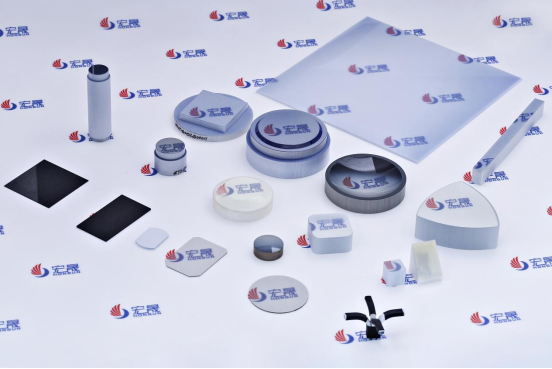
Key Takeaways
l Fiber optic plates transmit light and images with high clarity, making them essential for advanced optical systems.
l These plates offer minimal distortion and high resolution, which enhances image quality in applications like night vision and medical imaging.
l Different types of fiber optic plates, such as standard, tapered, and inverted, cater to various imaging needs and environmental conditions.
l Durability and compact design allow fiber optic plates to perform well in harsh environments, supporting industries like aerospace and defense.
l Proper handling and maintenance are crucial to maximize the lifespan and performance of fiber optic plates.
What Are Fiber Optic Plates?
Definition and Structure
You encounter fiber optic plates in many advanced optical systems. These plates consist of thousands of optical fibers, each with a diameter measured in microns. Manufacturers arrange these fibers in a parallel bundle, creating a solid plate that transmits light and image information from one surface to another. You see this structure as a bridge for image transfer, where each fiber acts as a channel for photons. The result is a device that preserves the spatial arrangement of the image, allowing you to capture and relay detailed visuals with high fidelity.
Fiber optic plates differ from traditional optical components. You notice that they do not rely on lenses or mirrors. Instead, they use fiber optic technology to guide light directly through the plate. This method ensures minimal distortion and maintains the integrity of the image. You benefit from the compact design, which fits seamlessly into imaging devices without adding bulk. The unique structure supports applications where you need precise image transfer, such as night vision goggles, medical imaging devices, and scientific instruments.
If you want to explore the range of fiber optic plates available, you can visit honsun’s fiber optic plate product page.
*Image alt: Fiber optic plate structure showing bundled optical fibers*

Key Features
You gain several advantages when you use fiber optic plates in your optical systems. The features below distinguish these plates from other optical transmission devices:
Feature | Description |
High Resolution | Enables detailed image transfer without loss of quality. |
Zero Thickness Image Transfer | Allows for seamless integration with imaging devices without added bulk. |
Customizable Fiber Sizes | Offers flexibility in applications with varying requirements. |
Hermetic Sealing | Ensures protection against environmental factors, enhancing durability. |
Radiation-Hardened Materials | Provides resilience in harsh conditions, suitable for specialized applications. |
You notice that fiber optic technology delivers improved image quality. The fibers guide light with minimal loss, resulting in brighter and clearer images. Each fiber preserves the position of incident photons, so you receive undistorted images with high spatial fidelity. The compact design allows you to build smaller devices without sacrificing performance.
l Improved image quality: You see brighter and clearer images because fiber optic plates guide light efficiently.
l High spatial fidelity: Each fiber maintains the position of photons, so you get undistorted images with high resolution.
l Compact design: You can create smaller devices with twisted fiber assemblies, maintaining performance.
You find these features essential in applications where image clarity and durability matter. Fiber optic plates support night vision, medical imaging, and scientific research. You can learn more about specialized plates, such as fiber-optic plate inverters and microchannel glass panels, on honsun’s product pages.
If you want to see how fiber optic technology enhances your imaging systems, you can explore honsun’s fiber optic solutions.